Truth is Sufficient

Study Materials

Boundaries of the Faith

The idea of boundaries makes people uncomfortable. We live in an age that prizes openness and the removal of limits -and the church has not been immune to that pressure. But here is what the Word makes plain: the boundaries of the Faith are not man-made, and they are not negotiable. They were established by Christ Himself, and they exist not to confine His people but to carry them. The boundaries of our Faith is a foundational truth which must be understood by everyone who names the name of Christ
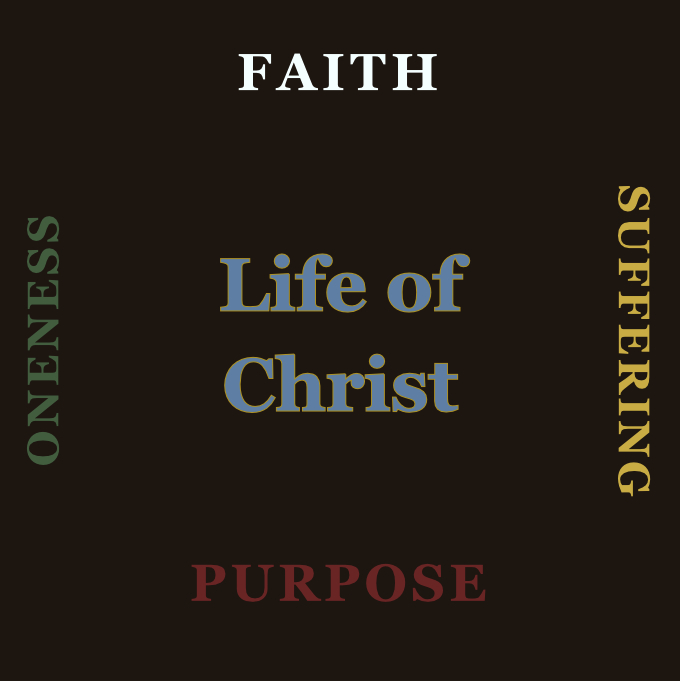
The life of Christ is not simply a model to admire from a distance. It is the container that holds everything God has freely given us. And within that life, the framework of the faith rests on four non-negotiable pillars
The Boundaries of the Faith

Christ Is the Author

Within His life, the framework of our faith rests on four walls. Each one is essential. None is optional.

Oneness
Explore
I

Oneness

The divine design of the Body — one Spirit, one Lord, one faith.

Ephesians 4:4–6
New Testament Faith
Explore
II

Faith

The operation of God in the earth — rooted in belief, proven in obedience.

Hebrews 6:19
Suffering
Explore
III

Suffering

The missing link — the bridge from spiritual birth to maturity as sons.

1 Peter 4:12–13
Purpose
Explore
IV

Purpose

Everything God does is by design — nothing in your life is accidental.

Jeremiah 29:11 • Romans 8:28
Oneness
Wall One • Ephesians 4:4–6

Oneness

“There is one body, and one Spirit, even as ye are called in one hope of your calling; One Lord, one faith, one baptism, One God and Father of all, who is above all, and through all, and in you all.”

Ephesians 4:4–6

Oneness is not a preference among God’s people — it is His design for them. Seven times the word one appears in those two verses. That is not poetic repetition. That is a theological declaration.


The church was never meant to be a collection of competing tribes held loosely together by a shared name. It was meant to be a body — unified in Spirit, anchored to one Lord, walking in one faith. The idea that diversity of belief represents spiritual generosity is not grace. It is a dangerous illusion.

Paul’s call was specific: walk worthy of your calling, carry yourself with lowliness and longsuffering, and endeavor to keep the unity of the Spirit in the bond of peace. Oneness requires effort — and it requires truth. A comfortable coexistence of conflicting doctrines is not unity. It is compromise dressed in the language of peace.

New Testament Faith
Wall Two • Hebrews 6:19

Faith

“Which hope we have as an anchor of the soul, both sure and steadfast, and which entereth into that within the veil.”

Hebrews 6:19

Faith is more than a disposition. It is the operation of God in the earth — the mechanism through which He moves. It cannot be separated from the life of Christ, who is both its source and its standard. Belief is where faith begins, but faith is not where belief ends.


Jesus is the supreme example: He believed the Father completely, which meant He was always in agreement with the Father. That alignment — total trust in what God said — is the posture true faith calls every believer into.

Three realities define faith within its proper boundaries: Faith operates only within the life of Christ — not outside it. Unbelief is destructive, not neutral — to persistently refuse God’s Word is to call Him a liar. And true faith produces obedience — genuine belief and consistent disobedience cannot occupy the same space for long. The Holy Canon stands as the final authority over every matter of faith.

Suffering
Wall Three • 1 Peter 4:12–13

Suffering

“Suffering is the bridge that carries the Body of Christ from birth into the Kingdom, to walking in the Spirit as a manifested son of God.”

From the Teaching Library

Of the four walls, this is the one the modern church is most reluctant to address — and that reluctance has consequences. Suffering is called the missing link in teachings designed to produce mature sons of God. As long as ministers refuse to embrace this truth, the link remains missing and the people remain incomplete.


Suffering is not a detour from the Christian life — it is a defined part of it. It encompasses grief, distress, affliction, heaviness, and reproach. These are the ordinary weight of walking faithfully in a world misaligned with the Kingdom.

Walking in perfection — walking consistently in the Spirit — is simply defined as choosing to obey all the time and in all things. Suffering is the fire that develops us into exactly that kind of person. It is not a sign that God has withdrawn. It is evidence that He is at work — His intentional process of bringing His sons from infancy into fullness.

Purpose
Wall Four • Jeremiah 29:11 • Romans 8:28

Purpose

“For I know the thoughts that I think toward you, saith the Lord, thoughts of peace, and not of evil, to give you an expected end.”

Jeremiah 29:11

Nothing in the life of a believer is accidental. Nothing is wasted. The God we serve is a God of intention — of structure, sequence, and precise instruction. Purpose is not something discovered after the fact. It is something we are called into from the beginning.


The purpose boundary establishes three realities: There will ultimately be one Church — one Body that manifests the righteousness of God in the earth. Its members will know their God — and a voice that does not belong to Him, they will not follow. And the gospel of the Kingdom must be preached to all nations — and then the end shall come.

God’s mandate is never vague. He gives clear instruction — and we will not fulfill His purpose in our lives except we follow those instructions. Purpose is not a destiny that arrives regardless of our choices. It is something we walk into through deliberate, informed obedience.

"All Scripture is breathed out by God and profitable for teaching, for reproof, for correction, and for training in righteousness."

— 2 Timothy 3:16
Scroll to Top